Medical Assistant Training Program: Is the Investment Worth It in 2026?
Before you commit to a medical assistant training program, you want to know the math works out. Will the salary justify the tuition? Will you recoup the investment quickly? Is this a smart financial decision — or just a fast one?
The numbers tell a clear story: medical assistant training is one of the highest-ROI career investments available in healthcare. Here’s exactly why.
The cost: what medical assistant training programs charge
Training costs vary significantly depending on the type of program:
- Accelerated certificate programs (12–18 weeks): typically $2,000–$6,000
- Diploma programs (6–12 months): $5,000–$15,000
- Associate’s degree programs (1–2 years): $10,000–$30,000+
Las Vegas Medical Assistant School falls into the accelerated category — focused on job-essential skills, affordable, and designed to get you earning as quickly as possible.
The return: what medical assistants earn
According to the Bureau of Labor Statistics (BLS) and salary sites like Indeed and Glassdoor (2026):
- Entry-level: approximately $32,000–$38,000/year ($15–$18/hour)
- National median: approximately $42,000–$46,000/year ($20–$22/hour)
- Experienced / specialty: $48,000–$55,000+/year ($23–$26+/hour)
If you complete an accelerated program and start working within a few months, you could earn $24,000–$32,000 in your first partial year — far exceeding your training investment.
The ROI comparison: accelerated vs. longer programs
Accelerated program graduate
- Training time: 12–18 weeks
- Cost: $2,000–$6,000
- Time to first paycheck: approximately 4–6 months from enrollment
- First-year earnings: approximately $28,000–$34,000 (8–10 months of work)
- Debt at graduation: Often $0 with payment plans
- Net first-year position: approximately $22,000–$32,000 ahead
Community college graduate (1 year)
- Training time: 9–12 months
- Cost: $5,000–$15,000
- Time to first paycheck: approximately 12–15 months
- First-year earnings: $0 (still in school)
- Debt at graduation: Often $5,000–$10,000
- Net first-year position: approximately -$5,000 to -$15,000
Associate’s degree graduate (2 years)
- Training time: 2 years
- Cost: $10,000–$30,000+
- Time to first paycheck: approximately 2+ years
- First two-year earnings: $0
- Debt at graduation: Often $15,000–$30,000+
- Net two-year position: -$10,000 to -$30,000+
Over five years, the accelerated graduate who starts working sooner and debt-free can be $40,000–$70,000+ ahead of someone who took a longer, more expensive path — while earning the same salary once they’re both employed.
What makes a training program worth the investment
It must lead to certification
The CCMA (Certified Clinical Medical Assistant) credential through the NHA matters to employers. Programs that include exam prep produce graduates who are more competitive and earn more.
It must include real clinical practice
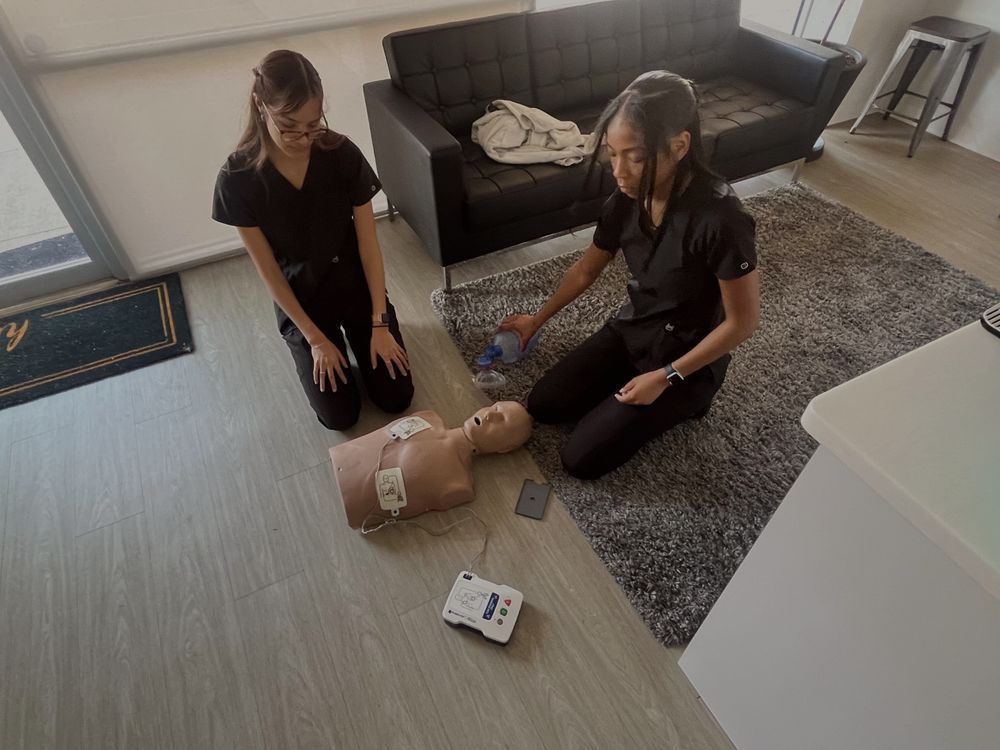
You can’t learn to draw blood, give injections, or perform EKGs from a screen. Hands-on training with real equipment is essential.
It should be time-efficient
Every week spent in unnecessary coursework is a week you’re not earning. The best programs eliminate the filler and focus on what medical offices actually need from day-one employees.
It should be affordable — by design
Programs under $6,000 with payment plans let you complete training without taking on student debt. That means every dollar of your salary goes toward building your life, not paying off loans.
The job market backing up the investment
The demand for medical assistants is strong and growing:
- BLS projects 15% employment growth through 2032 — much faster than average for all occupations
- Medical offices, clinics, urgent care centers, and hospitals near Las Vegas are actively hiring
- An aging population requiring more healthcare services drives consistent demand
- Certified MAs with hands-on training are the candidates employers want most
Factors that increase your earning potential
- Certification — CCMA-certified MAs earn $2,000–$5,000+ more per year
- Specialty experience — cardiology, dermatology, orthopedics, and other specialties pay more
- Reliability and tenure — consistent raises for dependable employees
- Expanded skills — phlebotomy, EKG, medication administration
- Leadership — lead MA roles, clinical coordinator positions, office management
Who gets the best ROI from a medical assistant training program?
- Career changers — fast, affordable entry into healthcare from any background
- Working adults — flexible schedules let you train while maintaining income
- Cost-conscious students — accelerated programs minimize both tuition and time out of the workforce
- People avoiding student debt — graduate and start earning without owing anyone
- Anyone who wants healthcare work quickly — months, not years
Common questions about the investment
“Is the salary enough to live on?” In most areas, yes — especially when you’re earning from month 4 or 5 rather than year 2 or 3. The BLS median of $42,000–$46,000/year provides solid purchasing power, and raises come relatively quickly with certification and experience.
“What if I don’t like it?” Medical assistant skills transfer across healthcare. If you decide to pursue nursing, medical coding, health administration, or another path, your training and experience provide a relevant foundation.
“Are there benefits?” Most full-time MA positions include benefits packages — health insurance, paid time off, retirement plans. Larger practices and healthcare systems tend to offer the most comprehensive packages.
“How does MA pay compare to other short-training healthcare roles?”
- Medical assistant: $42,000–$46,000/year median
- Pharmacy technician: $38,000–$40,000/year
- Phlebotomist: $40,000–$42,000/year
- CNA: $35,000–$38,000/year
Medical assisting offers competitive pay with broader scope and stronger advancement potential.
Five-year earnings comparison: accelerated vs. longer programs
Here’s what the numbers look like over five years, assuming the same $42,000/year starting salary once working:
Accelerated program graduate (starts working month 5):
- Year 1 earnings: ~$33,600 (8 months of work)
- Years 2–5 earnings: ~$168,000–$200,000
- Training cost: ~$3,000–$6,000
- Debt: $0
- 5-year net: approximately $195,000–$228,000
Associate’s degree graduate (starts working month 24):
- Year 1–2 earnings: $0 (in school)
- Years 3–5 earnings: ~$126,000
- Training cost: ~$20,000–$30,000
- Debt: often $15,000–$25,000+
- 5-year net: approximately $96,000–$111,000 after debt
The accelerated path can leave you $80,000–$100,000+ ahead over five years — while earning the same salary once both are working.
The broader healthcare job market
Medical assistant demand doesn’t exist in isolation — it’s driven by structural trends in healthcare:
- An aging Baby Boomer population needing more frequent medical care
- Expanded insurance coverage under the ACA keeping more people in regular care
- A shift toward outpatient and primary care settings (where MAs are most common)
- Physician practice growth as more doctors open or join group practices
These trends aren’t going away. The BLS projection of 15% growth through 2032 reflects long-term, structural demand — not a short-term spike.
The certification advantage in numbers
The CCMA credential isn’t just a nice-to-have — it’s a measurable financial return:
- Non-certified MA starting salary: approximately $32,000–$36,000/year
- CCMA-certified MA starting salary: approximately $36,000–$42,000/year
- Annual premium: approximately $2,000–$6,000+
- 5-year premium: approximately $10,000–$30,000+ in additional earnings
Programs that prepare you for certification — and that integrate exam prep throughout, not just at the end — consistently produce graduates who earn more from their very first position.
Start your training at Las Vegas Medical Assistant School
The math is simple: affordable training, fast timeline, strong salary, growing demand. Las Vegas Medical Assistant School offers a program designed to maximize every part of that equation.
- See the program: Program details
- Review tuition and payment options: Tuition
- Talk to our team: Contact
- Apply: How to apply
You're only a few months from the medical assistant career you deserve.